
Best times of the year for sailing in Aruba (weather, crowds & views)
Aruba gets called “One Happy Island” so often it starts to sound like a slogan — until you’re actually on the water here and realize the weather genuinely just cooperates in a way that most destinations can’t promise.
That said, timing still matters. The island sails well year-round, but the experience shifts depending on when you go — crowds, prices, availability, and the quality of an evening sunset are all different in December than they are in July. Whether you’re booking a family Aruba boat tour, a private charter for two, or a Champagne & Lobster sail, knowing what each season actually delivers helps you book the right trip rather than just the next available one.
Here’s an honest breakdown of what to expect throughout the year — weather, water, crowds, and views included.
Aruba’s Sailing Climate: What You Need to Know
The first thing worth understanding about Aruba is where it sits. The island is well south of the hurricane belt, which means it sidesteps the storm season that makes sailing unpredictable across most of the Caribbean from June through November. While other islands are dealing with weather uncertainty, Aruba just keeps going.
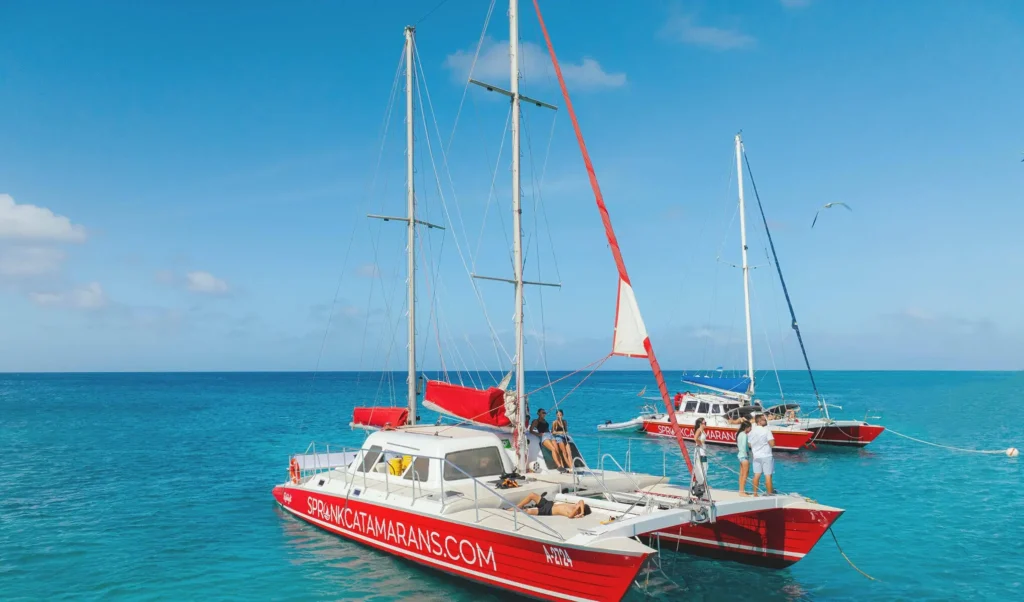
Water temperature stays between 82–84°F year-round. Air temperature hovers around the same. The trade winds blow consistently from the northeast — not aggressively, but reliably — which is exactly what makes real wind-powered sailing work here the way it does. Spronk’s catamarans run on those winds, and on most days they deliver.
Visibility underwater is strong for the majority of the year, which matters when snorkelling is part of the itinerary — and on most Aruba boat charter experiences, it is.
The honest takeaway is that there’s no month where sailing in Aruba is a bad idea. The question is more about what version of the experience you’re after — and that’s where the seasons start to matter.
High Season (December – April): Peak Perfection with Crowds
This is Aruba at its most reliable. December through April brings the driest conditions of the year — consistent sunshine, calmer seas, and the kind of evening light that makes sunset sails look exactly like the photos. If you’ve never been to Aruba before and you want the experience to deliver without variables, this is the window to book.
Visibility underwater is at its best during these months, which makes snorkel stops at the Antilla wreck or Boca Catalina particularly rewarding. The sunsets are dramatic and consistent — the dry air tends to produce cleaner, more vivid skies than the wetter months.
The trade-off is straightforward. High season means higher prices across the board and more people competing for the same spots. Spronk’s Champagne & Lobster sail runs with a maximum of 16 guests, which keeps the experience intimate — but that also means it fills up faster than most people expect during peak months. If you’re planning a December or February trip, booking weeks in advance rather than days is the smarter move.
For first-time visitors, families wanting guaranteed good weather, or anyone planning a romantic Aruba sunset catamaran cruise, this is the season that removes most of the uncertainty. Morning and sunset departures both perform well throughout December to April — it’s genuinely difficult to have a bad sail here during these months.
Shoulder Seasons (May–June & September–November): The Sweet Spot
For most people who’ve done their research, this is when they book.
May and June sit in a particularly good position — the high season crowds have cleared out, prices drop noticeably, and the weather hasn’t changed enough to matter. Water conditions stay strong, snorkeling remains excellent, and the catamaran doesn’t feel like it’s competing with half the island for the same departure slot. It’s marginally warmer than the peak months but nothing that affects the experience on the water, where the trade winds handle most of that anyway.
September through November is quieter still. Rates are lower, availability opens up considerably — including for private boat tours in Aruba that might have had limited slots during peak season — and the overall atmosphere on the island is more relaxed. There’s a slightly higher chance of a passing shower during these months, but Aruba’s showers tend to be brief and the trade winds clear things out quickly. Most sailing days still run without interruption.
For couples looking for something more intimate, repeat visitors who already know what they want, or anyone trying to book a private sail in Aruba without the high-season price tag, the shoulder months consistently deliver. Same catamaran, same crew, same snorkel spots — just fewer people and more breathing room around the whole experience.
Low Season / Off-Season (July–August): Quiet & Budget-Friendly
July and August are Aruba’s warmest months, and the island knows it. The crowds thin out, prices on Aruba boat tours drop to their lowest point of the year, and the marina at Oranjestad feels noticeably quieter than it does in February.
The trade winds don’t disappear during these months — they stay steady, which keeps sailing conditions workable and makes the heat on deck more manageable than it sounds on paper. Occasional showers pass through, but rarely in a way that derails a full afternoon on the water. Most days are still predominantly sunny.
What changes is the atmosphere. July and August have a more local, unhurried feel to them — less resort energy, more actual island. For groups looking to book a full private Aruba boat tour without competing for dates, this is the easiest window to do it in. Space on deck, availability in the calendar, and pricing that makes the private charter conversation significantly more approachable.
The honest downside is the heat. On land it’s noticeable. On the water, with the sails up and the trade winds running, it’s considerably less of an issue — but worth factoring in if your group runs warm.
How to Choose the Best Time for Your Sailing Style
The right season depends less on weather — which is genuinely good year-round — and more on what you’re trying to get out of the day.
Planning a proposal or romantic sail? December through April delivers the most reliable sunsets and the clearest skies. Shoulder season (May–June) is a close second with fewer people around, which suits the occasion better anyway.
Traveling with family? High season or early shoulder. Predictable conditions, calm water, and no unpleasant weather surprises when you have kids on deck.
After a private or luxury experience? Shoulder or low season. Easier to secure dates, better pricing on private charters, and the Champagne & Lobster sail feels considerably more intimate when the island isn’t at full capacity.
Conclusion
Aruba doesn’t really have a bad time to sail. But it does have better ones — and for most people, the shoulder seasons hit the right balance of good weather, reasonable prices, and enough space on the water to actually enjoy it.
That said, the best time is ultimately whenever you can go. The catamaran, the trade winds, and the Caribbean are all waiting regardless of the month.
Book your Aruba boat charter with Spronk Catamarans → spronkcatamarans.com
 Chat on WhatsApp
Sail With Us
Select Your Preferred Sailing Experience and Our Team Will Make Sure
You Experience the Best Sailing Experience From the Best on Aruba.

AS SEEN ON
Featured by respected marine publications and industry leaders
