
How Caribbean Trade Winds Create the Perfect Sailing Conditions
The Caribbean’s reputation for ideal sailing didn’t happen by accident. It was written by the trade winds — and sailors have known this for centuries.
These steady easterly breezes powered the first transatlantic crossings, shaped colonial trade routes, and still define what sailing feels like in this part of the world today. Nobody who’s been out on the water here in a proper wind needs it explained. But for anyone planning their first Caribbean catamaran sailing experience, understanding what the trades actually are and what they do makes the difference between booking a trip and knowing exactly what you’re in for.
Aruba sits in one of the most reliable pockets of trade wind sailing on the planet. Here’s why that matters.
What Are Caribbean Trade Winds?
Trade winds are bands of persistent easterly winds that circle the tropics, driven by the way the atmosphere circulates heat from the equator toward the poles. Warm air rises near the equator, cooler air rushes in to replace it, and the Earth’s rotation bends that movement into a consistent northeast-to-east flow. The result is wind that blows from roughly the same direction at roughly the same strength, day after day, across the tropical Atlantic and Caribbean.
In numbers, that translates to somewhere between 12 and 25 knots for most of the year. Strong enough to push a catamaran along at proper speed, light enough that the deck stays comfortable. The winter months bring the strongest and most consistent version of this, often called the Christmas winds, running toward the upper end of that range with real energy behind them. Late summer softens things slightly. But the pattern never disappears entirely, especially in the southern Caribbean.
Aruba, Bonaire, and Curaçao sit well south of the main hurricane belt. That positioning means the trade winds run here year-round without the seasonal disruption that affects islands further north. It’s not a coincidence that sailors keep coming back to this part of the Caribbean.
Why Trade Winds Make Sailing So Good
Most morning sailing Aruba in variable conditions involves constant adjustment. The wind shifts, you trim the sails. It drops, you lose momentum. It gusts, you react. It’s engaging, but it’s also work.
Trade wind sailing is different. The wind comes from the same direction at the same strength hour after hour, which means the boat finds its groove and largely stays there. Beam reaches, where the wind crosses the boat from the side rather than head-on or directly behind, are the most comfortable point of afternoon sail Aruba on most vessels. Caribbean catamaran sailing in trade wind conditions delivers them almost by default. You set the sails, the boat accelerates, and then you just sail.
The cooling effect is the other thing nobody really talks about until they’ve experienced it. Tropical heat sounds like a problem until you’re on a catamaran doing eight knots with 20 knots of wind running across the deck. The steady breeze drops the effective temperature significantly and keeps humidity from building the way it does on still days ashore.
Geography handles the rest. The leeward coasts of Caribbean islands, the western and southern sides sheltered from the full trade wind flow, sit in consistently calm water. Flatter seas, better visibility for snorkeling, easier anchorage. The windward side takes the full brunt and stays choppy. Serious operators plan their routes accordingly.
Seasonal Variations and What They Mean for Sailors
December through July delivers the most reliable conditions. The trades are consistent, visibility is excellent, and the sailing has real energy to it. This is when the experience tends to match what people imagined when they booked.
August through November is softer. The trades lighten, conditions become more variable, and the occasional weather system moves through the broader region. In Aruba specifically this rarely translates into genuinely difficult sailing. The island’s southern position keeps the worst of the Atlantic storm season at a distance. Lighter wind and flatter water suit some people better than the stronger months. It’s a different experience rather than a worse one.
Time of day creates its own variation too. The land heats through the morning and that thermal effect adds to the trade wind strength as the day builds. A morning sail in Aruba typically starts in softer, calmer air. The afternoon sail catches the trades at their most developed, with more speed, more spray, and a more dynamic feel on deck.
How Trade Winds Shape the Daily Sailing Experience
There’s something that happens on a trade wind sail that’s hard to describe before you’ve felt it. The sails fill, the boat settles into its angle, and then it just goes. The sound of wind in the rigging becomes background. The spray coming over the bow becomes part of the rhythm. The motion is consistent enough that your body adjusts to it within the first half hour and stops thinking about it.
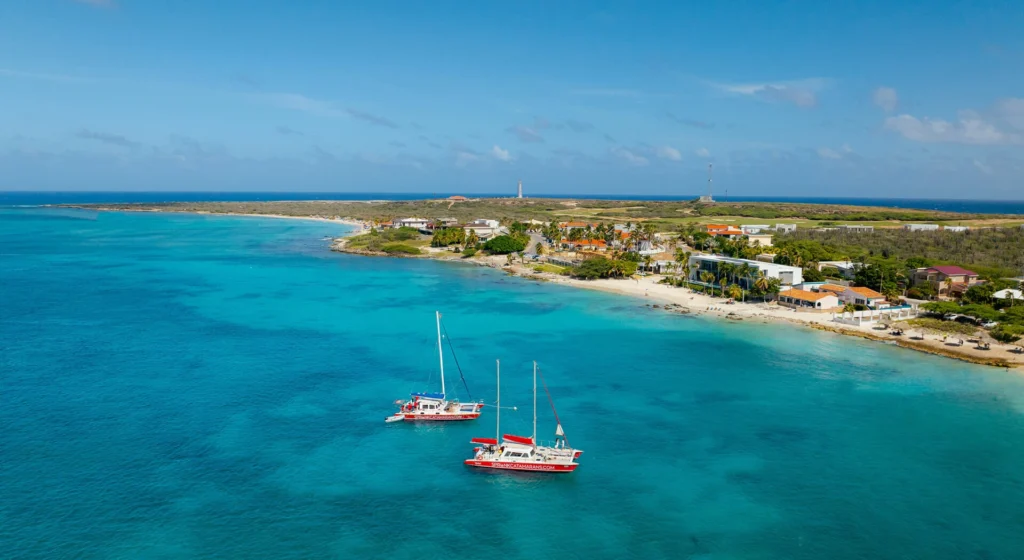
Route planning follows the wind and the geography. Day sails stay on the leeward coast where the water is calm and the snorkel sites are reachable without fighting the chop. The Antilla wreck, Boca Catalina, Tres Trapi, Mangel Halto. All of them on the sheltered side, all of them accessible because the trade winds keep the leeward coast in good condition nearly every day of the year.
This is also what separates real sailing from being ferried somewhere by a motor. When the sails go up and the engine goes off, the boat becomes part of the environment rather than something working against it. People notice that shift even when they can’t name exactly what changed.
Experiencing Trade-Wind Sailing in Aruba
Aruba’s flat terrain means the trades pass over the island cleanly without the funneling and gusting that mountainous Caribbean islands create. Combined with its southern position, this gives the island some of the most consistent day-sailing conditions in the region. The western and southern coasts stay protected and calm for the vast majority of the year.
A morning sail in Aruba catches the softer early conditions. Flat water, gentle breeze, the whole pace of the day unhurried. It suits snorkeling stops and relaxed sailing between sites. The afternoon sail in Aruba uses the fully built trades for a more energetic experience, with the sunset waiting at the end of the return leg.
For anyone wanting the full experience without sharing a boat with strangers, private boat tours in Aruba put the whole catamaran and its trade wind routes entirely at your disposal. The same conditions, the same leeward coast, the same snorkel sites, but with complete flexibility over timing and itinerary.
Practical Tips for Sailors
A light long-sleeved shirt handles the trade wind spray better than it sounds. The breeze dries everything quickly and the sun is stronger on the water than most people plan for. Reef-safe sunscreen is non-negotiable.
Motion sickness is less of an issue in steady trade wind conditions than in variable or confused seas. The motion is consistent and rhythmic rather than unpredictable. Anyone who’s had trouble on boats before is often surprised by how manageable it is here. That said, taking something before boarding is still the sensible move.
Morning conditions suit people who prefer calm and controlled. Afternoon suits people who want the full trade wind experience. Both are worth doing if the trip allows for it.
Conclusion
The Caribbean trade winds have been creating ideal sailing conditions for centuries and they haven’t changed. Reliable, cooling, and perfectly suited to a catamaran on a leeward coast with a full day ahead.
Aruba sits right in the middle of all of it. Once you’ve felt what steady trade wind sailing actually does to an afternoon, going back stops needing much justification.
Experience it for yourself with Spronk Catamarans → spronkcatamarans.com
 Chat on WhatsApp
Sail With Us
Select Your Preferred Sailing Experience and Our Team Will Make Sure
You Experience the Best Sailing Experience From the Best on Aruba.

AS SEEN ON
Featured by respected marine publications and industry leaders
