
The Difference Between Cruising, Sailing and Motor Boating Explained
Ask ten people what they did on their boat day and nine will say they went sailing. Maybe six actually did. The rest were on a motorboat, or on something with sails that never came out of the bag, and most of them couldn’t tell you the difference.
That’s fine when you’re just having a good time. It matters a bit more when you’re the one booking. Sailing and motor boating describe what moves the boat. Cruising describes how you spend your time on it. Here’s what each one really means, so you know what you’re signing up for.
What Is Sailing?
Sailing means the wind moves the boat. That’s the whole definition. The sails go up, the wind fills them, and the boat goes where the breeze and the crew’s skill can take it. If the sails are up but the engine is doing the work, that’s motoring, whatever the brochure says.
The first thing you notice is how quiet it gets. With the engine off, you hear water running along the hull and the occasional snap of a sail being trimmed. The boat leans a little, picks up speed, and starts to feel oddly alive. It can’t head straight into the wind, so the crew picks a route that suits the conditions. Most people who love sailing love it because of that trade.
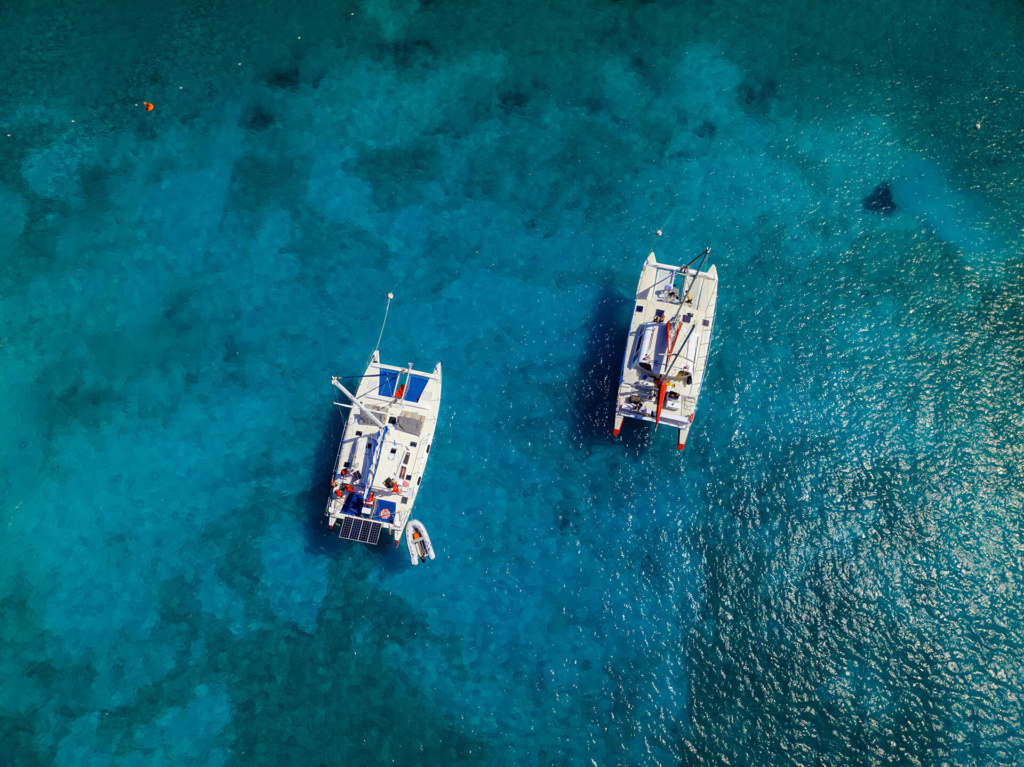
On a monohull the lean can get dramatic. Some people enjoy it and some grip the rail. A catamaran has two hulls, so it stays fairly flat. You can walk around with a drink in your hand and still get everything that makes sailing what it is. In Aruba, where the trade winds hardly ever quit, catamaran sailing in Aruba is about as easy an introduction to the real thing as you’ll find.
What Is Motor Boating?
A motorboat runs on an engine and that’s it. Point it somewhere, push the throttle, and you arrive. Wind barely matters, and neither does which direction you’re headed. That’s why motorboats make sense if you’re fishing offshore, towing a tube, or trying to reach a dive site before lunch.
Speed is the big advantage. A boat doing 25 knots covers ground a sailboat can’t touch, and if the wind dies at noon, nobody’s plans change.
The downside is atmosphere. The engine is always running. You talk a little louder, catch a whiff of fuel now and then, and the ride is more about the boat’s power than the water it’s sitting in. Plenty of people don’t mind at all. For a quick hop or a fishing day, you probably won’t even notice.
What Is Cruising?
Cruising is the odd one out because it says nothing about how the boat moves. A cruising boat can run under sail, under engine, or both in the same afternoon. What makes it cruising is the way you use it. No rush, a route that shifts with the weather, nights at anchor in some quiet bay, breakfast in the cockpit.
It usually means days or weeks, not hours. Cruisers plan around anchorages, groceries, and how much water is left in the tank. It’s less of a tour and more of a way of living for a while.
A half-day trip doesn’t really count, though people use the word loosely and nobody’s going to correct them. If an operator says “cruise” and means a four-hour outing, that’s fine. Just know the real thing involves a lot more time and a bed on board.
Side-by-Side Comparison
| Sailing | Motor Boating | Cruising | |
| Propulsion | Wind | Engine | Either, or both |
| Wind dependence | High | None | Depends on the boat |
| Noise on deck | Quiet | Engine always on | Varies |
| Skill needed | Crew handles it | Basic helm skills | A lot of seamanship |
| Typical trip | Half day to a full day | Short hops, fishing, sport | Days to weeks |
| Best for | Feeling the trip | Speed and specific jobs | Slow travel |
Which Style Fits Different Travelers?
Sailing suits people who’d rather feel a trip than just get through it. If you like the idea of the wind doing the work and don’t care about arriving at an exact minute, this is you. Motor boating suits people with a job to do, like fishing, water sports, or a fast run out to a far reef. Cruising suits people with real time, a week or more, who want to drift from one bay to the next.
Most visitors to Aruba fall into the first group. You probably don’t have the time to cruise and you probably don’t need a fast boat. A day on a charter catamaran in Aruba gives you the sailing part in about four and a half hours, with snorkel stops and no skills required. Spronk runs morning and afternoon departures for exactly this. Groups that want the whole boat can look at a private sail in Aruba, and Aruba sailing charters can be shaped around your group instead of a fixed route.
Practical Tips for Choosing the Right Experience
Before you book, ask a few plain questions. Are the sails actually used, or is it mostly engine? Some “sailing” trips motor most of the way. How many people are on board? How long is the trip door to door, and how much of that is actual water time?
For a day trip, group size and comfort matter more than boat type. Sixteen people on a stable catamaran feels very different from sixty on a party boat. In Aruba the weather rarely gets a vote, since the trades are steady and most days are sailable. Bring sunscreen, a towel, and something for motion sickness if you’re prone to it.
Conclusion
Sailing and motor boating are about what pushes the boat. Cruising is about how long you’re out there. Once that’s clear, picking a trip gets easier, because you can ask for what you actually want instead of whatever the brochure calls it.
If what you want is wind, a steady deck, and a few quiet hours on the water, Spronk’s sailing options are worth a look.
Explore sailing options with Spronk Catamarans → spronkcatamarans.com
 Chat on WhatsApp
Sail With Us
Select Your Preferred Sailing Experience and Our Team Will Make Sure
You Experience the Best Sailing Experience From the Best on Aruba.

AS SEEN ON
Featured by respected marine publications and industry leaders
